Old Sussex County Folklore · Legend #1
The Old Pig Drover of Logg Gaol
Old Sussex County Folklore, Legend #1: the drover who charmed Logg Gaol's tavern crowd with tales of the South turned out to be a ruined Tennessee gentleman, until his son came looking.
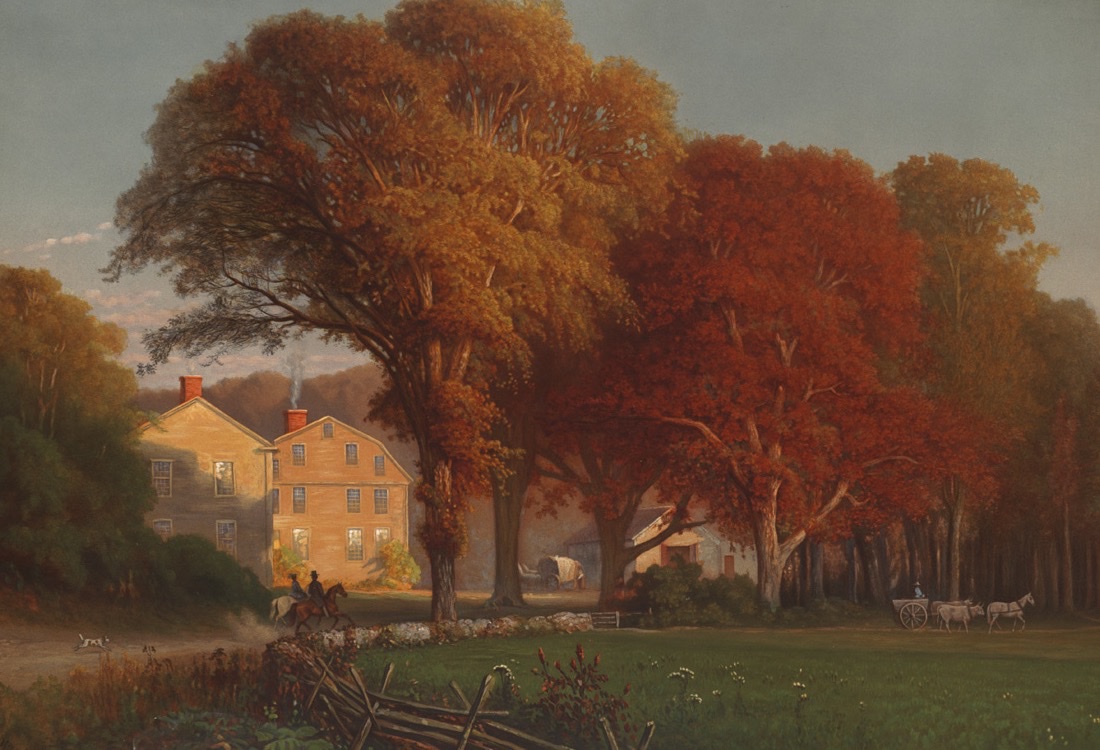
Logg Gaol, Sussex County (present-day Johnsonburg, Warren County)
There are people who leave their mark on history through office, wealth or accomplishment. Others are remembered because they were simply impossible to forget. Their stories may never have appeared in newspapers as major events, yet they traveled through taverns, farms and neighboring communities until someone finally thought to write them down. The Old Pig Drover of Logg Gaol belonged to that second kind of history.
During the nineteenth century, the roads of northwestern New Jersey carried more than wagons and travelers. Livestock moved along them as part of the agricultural economy, with drovers taking animals from farms toward the larger markets of the region. Among those men was a peculiar figure remembered for his ability to handle pigs, his talent for storytelling and, eventually, the discovery that the identity he presented to the people around him was not the identity he had once possessed.
For years, the residents who encountered him knew only one name: the Old Pig Drover of Logg Gaol. The man behind that name was Samuel Fulton. His story, preserved by W. H. Vail and repeated in later local histories, is one of the stranger pieces of nineteenth-century folklore to survive from the old Sussex County countryside.
The Man on the Road
A drove of pigs moving down a country road was not an unusual sight in nineteenth-century Sussex County. Farmers raised livestock for market. Animals had to be moved by men who understood how to keep them together over considerable distances. Such work required patience, familiarity with animals and a willingness to spend long hours on the road.
Samuel Fulton, according to the tradition, possessed those qualities in abundance. W. H. Vail described the Pig Drover as “an exceptionally curious character,” but his reputation began with something much more practical than his personality. Fulton had an unusual ability to control the animals under his care. A drove could contain as many as thirty pigs, yet the animals reportedly followed him with a remarkable degree of obedience.
Observers sometimes found his method difficult to understand. The explanation was carried over his shoulder in a simple bag. Fulton carried shelled corn and scattered kernels along the road as he walked. The pigs learned to follow the trail, turning what could have been a chaotic procession into an orderly one. Rather than chasing the animals from behind, Fulton gave them a reason to keep moving in the direction he wanted them to go.
Vail remembered the pigs following with “a docility perfectly astonishing.” What looked almost like witchcraft was really an understanding of animal behavior. That skill made Fulton useful, but it was his personality that made him memorable.
The man walking down the road behind a drove of pigs was not merely another agricultural laborer passing through the countryside. He had a presence that attracted attention, and wherever he stopped, people eventually became interested in the man himself. The roads carried him toward Newark, but they also brought him repeatedly through the community that would become inseparable from his name. Logg Gaol was where the Pig Drover became a character.
The Tavern Balcony
Long before Fulton arrived, Logg Gaol had developed around the roads that crossed the region. Its unusual name came from the crude log jail constructed there in 1754. The settlement eventually became an important stopping place for travelers moving through northwestern New Jersey.
A tavern in such a community served purposes far beyond eating and drinking. Travelers needed somewhere to stop. Farmers needed places to exchange information, while neighbors needed somewhere to gather. News traveled through conversation. Business was typically discussed over meals, and entertainment often depended upon whoever happened to possess the ability to keep a room listening.
Fulton apparently possessed that ability. Once the pigs had been settled, the drover could become a storyteller. Vail remembered that he had “in a high degree” the gift of making others laugh, and his stories about life in the South became part of his local reputation.
People gathered to hear him, and the tavern balcony at Logg Gaol became the setting for performances that had nothing to do with the livestock he spent his days driving. His stories were described as elaborate and fantastic. Whether every detail was true was almost beside the point.
The audience wanted to hear them, and Fulton knew how to hold their attention. A man who had arrived in town driving pigs could therefore become the evening's entertainment. That transformation is part of what makes the story so memorable.
In a rural society where there were few formal sources of entertainment, a gifted storyteller could become a local celebrity simply by knowing how to make people laugh and wonder. Fulton had found an audience, and the audience had found a character. Something about the man, however, eventually made people wonder whether the stories he told about other places were less revealing than the story he kept to himself.
“He Has a History”
Fulton's tales of the South were entertaining, but they also hinted at a background that seemed strangely out of place with the life he was living in New Jersey. His manner and knowledge spoke about another world. This apparently caused some people to suspect that the Pig Drover had once been someone very different.
Curiosity gradually replaced simple amusement. Someone eventually expressed the suspicion in words that Vail preserved: “That man is not what he pretends to be. He has a history.” The remark changed the nature of the mystery.
Letters were reportedly sent to people in the South who might have known the man's past. In an age when information traveled by mail and personal connections, not instant communication, uncovering someone's identity could require a surprisingly long chain of correspondence. The people around Logg Gaol did not have a database to search. They had names, memories and letters.
Eventually, those inquiries produced an answer. The Pig Drover had not simply appeared from nowhere. His name was Samuel Fulton. More importantly, the man who had become a familiar figure around Logg Gaol was said to have once belonged to a very different world.
The Gentleman from Tennessee
According to the account preserved by W. H. Vail and repeated in later local histories, Samuel Fulton was a man of considerable means from Tennessee. He is described as a wealthy gentleman whose life took an unexpected turn following the War of 1812. The story recounts that he lost his fortune and became separated from the life and family he had once known.
Fulton’s life in New Jersey marked a dramatic departure from his former circumstances. A man remembered as a prosperous Southern gentleman had become a traveling livestock drover. He was making his living along rural roads and working with farmers throughout northwestern New Jersey. His fortune was gone. His former standing had faded, and he had established a new life far from the home he had left behind.
Around Logg Gaol, Fulton became known for his work with livestock and his remarkable gift for storytelling. Residents watched him scatter shelled corn to guide his pigs along the road. They gathered to hear his entertaining tales from the balcony of the local tavern. To the people who knew him there, he was the Old Pig Drover.
He was a colorful local character whose stories made him a familiar presence in the community. For a time, Fulton’s former life remained behind him. Then inquiries sent south brought his past to light, setting in motion the events that would reunite him with his family.
When the Secret Was Discovered
When news of Fulton's identity began to spread, the man known as the Pig Drover could no longer be viewed in quite the same way. The stories he had told from the tavern balcony, once received as the entertaining tales of an eccentric traveler, now carried the weight of a life that had existed long before his arrival in Sussex County. The people of Logg Gaol had known Fulton through his humor, his storytelling, and the curious character he had made for himself.
The letters revealed that the man behind that familiar persona had ties to Tennessee, a family, and a past that stretched far beyond the little community where he had become a local figure. His tales of the South were no longer simply stories told by a wandering stranger. They were recollections of a world he had once inhabited.
The revelation changed the nature of the mystery surrounding him. Fulton’s identity was no longer the question. The question was how a man with an established life and a family history in Tennessee had come to live as the Pig Drover of Logg Gaol. The answer would come from an unexpected source: a member of his own family.
The Son Who Came Looking
The story of Samuel Fulton did not end with the discovery of his identity. According to the traditional account, his family in Tennessee had lost contact with him, and his son continued searching for the father who had disappeared from their lives. That search eventually brought him north to New Jersey, where he learned that his missing father was working on one of the Blair farms. The man he found was a far cry from the Tennessee gentleman his family remembered.
He was a farm laborer, earning his living through work on the land. Fulton was the pig drover, known to the people of Logg Gaol for the unusual life he had made for himself. Samuel was also the storyteller who had entertained the neighborhood in the tavern, sharing tales of the South with the people who had come to know him.
Samuel Fulton was the father his son had been searching for. The people of Logg Gaol discovered that the familiar local character was connected to a past they had only recently begun to understand. For Samuel’s son, the encounter reunited a name and a face with the father who had been missing from his life.
According to the traditional account, the son persuaded Fulton to return to Tennessee. The man who had spent years in the countryside of Sussex County would leave behind the Blair farm, the roads he had traveled, and the tavern balcony where he had become a local curiosity. His departure brought the New Jersey chapter of his life to a close.
The Pig Drover of Logg Gaol had arrived as a stranger, lived among the people of the neighborhood, and become the subject of a story that outlasted his presence there. But he did not remain a mystery forever. His son had come looking for a missing father. In the fields of Sussex County, Samuel was found.
The Place Called Logg Gaol
To understand the story of Samuel Fulton, it is important to understand the place where he became known as the Old Pig Drover. Logg Gaol’s name is preserved in an earlier chapter in the history of the community now known as Johnsonburg, New Jersey. The settlement took its name from a log jail constructed there in 1754.
Situated along roads connecting surrounding communities, Logg Gaol developed as a stopping place where travelers, farmers, and local residents crossed paths. It was within this rural landscape that Fulton would become a familiar figure. This is where he earned his recognition through his work as a pig drover and his reputation as a storyteller.
The name Logg Gaol eventually gave way to Johnsonburg. Around 1814, the community adopted its later name in honor of Jonathan Johnson, a local storekeeper and postmaster. In 1824, the creation of Warren County from portions of Sussex County further changed the region's administrative boundaries.
These changes in names and county lines can obscure the geography of early local history. On a modern map, Johnsonburg lies in Warren County. However, in the period associated with the Old Pig Drover, the community belonged to the historical landscape of Sussex County. This is before Warren County existed as a separate jurisdiction.
That distinction matters when tracing the places associated with Fulton’s life. The modern county line does not erase the community's earlier connections to Sussex County or the history that unfolded there. Its roads, farms, and settlements helped shape a region that existed long before the boundaries familiar to present-day residents were established.
The name Logg Gaol recalls that earlier world. It connects the story of the Old Pig Drover to a community whose identity changed over time, even as its place in the region's history endured. The name changed to Johnsonburg. County boundaries changed. The story of the Pig Drover, however, remained attached to the place where local tradition remembered him.
The Story That Survived
Samuel Fulton left no monument in Johnsonburg to mark the years he spent in the countryside of northwestern New Jersey. His name was not preserved on a courthouse, a bridge, or a prominent estate. He made his living through ordinary work, tending to the business of farms and livestock, and became known to his neighbors through the stories he told from the tavern balcony at Logg Gaol.
Without someone to preserve his story, his years in New Jersey might have passed into the vast collection of lives that history rarely records. Someone remembered. Vail preserved the account of the unusual drover who guided his pigs along the road by scattering corn before them.
Later local histories carried forward the connection between the man known as the Old Pig Drover and Samuel Fulton, preserving a story that linked a familiar rural character to a past his neighbors had never known. The enduring appeal of the account lies in the contrast between the life Fulton had once known and the one he built in New Jersey. His earlier years were associated with Tennessee, family, and a position in society far removed from the work he performed on the Blair farms.
In Sussex County, he became known through his occupation, his distinctive personality, and the tales that entertained the people of Logg Gaol. These were not simply two different places in a man's life. They represented two worlds separated by years of absence and a family that had lost track of him.
The people who listened to Fulton tell stories of the South encountered a man whose past was far more personal than they could have understood from his performances alone. According to the traditional account, that separation ended when his son found him in New Jersey and brought him back to Tennessee. Fulton departed, leaving behind the farms where he had worked and the community where he had become a recognizable figure.
The tavern, the roads, and the settlement continued through the years that followed, while the people who had known him firsthand eventually passed away. The place itself changed as well. Logg Gaol became Johnsonburg. The creation of Warren County in 1824 placed the community within a new county boundary.
The rural world in which Fulton had lived gradually receded into the past. Accounts of the man who once drove pigs along its roads survive in local historical writings. That survival is what gives the story its place in the history of the region.
Fulton was neither a public official nor a celebrated landowner. He was a man whose unusual circumstances, memorable occupation, and eventual reunion with his son made his life worth recording. Through the preservation of that account, a person who might otherwise have disappeared from the historical record remains connected to the community where he spent part of his life.
In the surviving story, he is still traveling the roads around Logg Gaol. He is scattering corn ahead of his pigs as he makes his way through the countryside. Behind that familiar figure stands Samuel Fulton.
He was a man whose earlier life and eventual return to his family gave the local tale a history extending far beyond the tavern where his neighbors knew him. Samuel will always be remembered first as the Old Pig Drover. History preserved the name of the man behind the story.
Sources and Further Reading
- W. H. Vail, The Old Pig Drover of Logg Gaol. The principal narrative account of the Old Pig Drover. Vail preserves the description of Fulton's handling of pigs, his storytelling at the Logg Gaol Tavern, the investigation into his identity, his identification as Samuel Fulton of Tennessee and the eventual discovery of him by his son.
- James P. Snell, History of Sussex and Warren Counties, New Jersey. Philadelphia: Everts & Peck, 1881, pp. 686–687. A major nineteenth-century county history and an important source for the historical development of Johnsonburg and the surrounding region. Later local historical material specifically cites these pages in connection with the Old Pig Drover tradition.
- Frelinghuysen Township, Open Space and Recreation Plan, February 2006, pp. 16–17. The township's historical section discusses the development of Johnsonburg from Logg Gaol, its role as an early crossroads community and the local tradition surrounding Samuel Fulton and the Old Pig Drover.
- The Lone Pilgrim, “History — Johnsonburg.” A modern local historical account preserving the Pig Drover tradition, including the description of his livestock-driving technique, his storytelling at the Logg Gaol Tavern and his eventual identification as Samuel Fulton.
- Kenneth Bertholf Jr. and Don Dorflinger, Blairstown and Its Neighbors. Regional historical material concerning Blairstown, Johnsonburg and surrounding communities, including local settlement, transportation and community history.
- National Register of Historic Places, Johnsonburg Historic District. Historical documentation concerning Johnsonburg's development and its significance as an early northwestern New Jersey settlement.
Old Sussex County Folklore preserves the people, places, scandals, mysteries, legends and forgotten stories of Sussex County, New Jersey.