Old Sussex County Folklore · Legend #2
The Mysteries of Jenny Jump Mountain
Old Sussex County Folklore, Legend #2: a girl's desperate leap gave Jenny Jump Mountain its name, or so the story goes. The legend, the misty Ghost Lake and the ancient rock shelter called Fairy Hole.
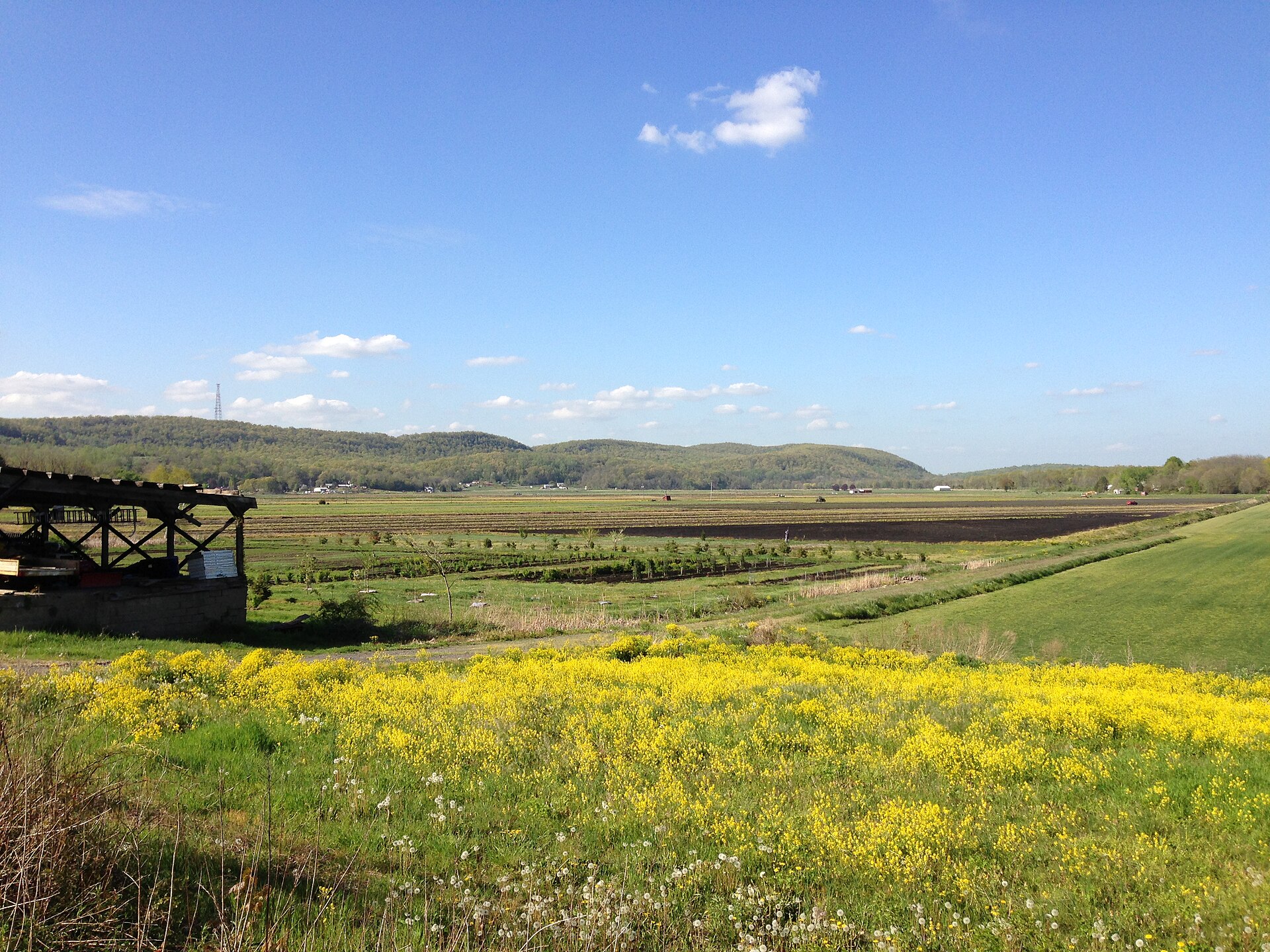
Jenny Jump Mountain, Warren County (the historic Sussex County region)
A young girl, a desperate leap, and a mountain forever marked by her name. Among the wooded ridges of northwestern New Jersey, the legend of Jenny Jump has endured for generations, shrouded in questions about who she was and what truly happened in these hills. The mountain’s rocky slopes, secluded hollows, and winding trails provide the setting for one of the region’s most enduring mysteries.
Yet, the story of Jenny Jump Mountain extends beyond the tragic figure whose name it carries. The surrounding landscape holds places steeped in intrigue, where unusual names, archaeological discoveries, and generations of local storytelling have blurred the boundaries between history and folklore. Some mysteries can be explored through historical documents and physical evidence, while others survive primarily through stories passed down over time.
Who was Jenny? What lies behind the story of her tragic fate? Historical records establish that the mountain’s name was already in use during the colonial period, with a reference dating to 1770 appearing in documentation concerning the Davis Homestead near Hope, New Jersey. However, that record does not establish Jenny’s identity or confirm the circumstances described in the familiar legend.
Over time, different versions of Jenny’s story emerged, each offering its own explanation for the mountain’s name and the tragedy said to have inspired it. The details vary, but the legend has endured long after the generations who first told it have disappeared. A mountain remains, its name preserving a story whose origins have yet to be conclusively established.
Although Jenny Jump Mountain now lies within Warren County, the region was once part of Sussex County before Warren County was established in 1824. Though the county lines have changed, the legends and traditions rooted in these hills remain woven into the history of the land and the people who called it home. Beyond Jenny’s legend, the surrounding countryside holds other intriguing places.
Ghost Lake carries a name that evokes tales of unexplained happenings, while Fairy Hole preserves archaeological traces of people who once sought shelter among the mountain’s ancient rock formations. Though these places are distinct, they share a common thread: the enduring human desire to understand the mysteries of the land.
Historical records and archaeological discoveries offer glimpses into the past, while local traditions preserve stories that might otherwise have disappeared. Together, they form a portrait of northwestern New Jersey where history and folklore remain intertwined. At the heart of this landscape stands Jenny Jump Mountain, bearing the name of a girl whose story has outlived the generations who first told it.
The Legend of Jenny Jump
At the heart of Jenny Jump Mountain is the story of a young girl whose name became permanently attached to the landscape. The most familiar version tells of Jenny living with her father in the rugged hills, where the pair supposedly made their home among the rocky terrain. According to the tale, Jenny was pursued or threatened by a man, and rather than face the danger before her, she leaped from the mountain to her death.
In some tellings, her father’s presence and the circumstances surrounding the pursuit become central to the tragedy. The details change from one version to another, but the image remains: a desperate leap from a rocky height, followed by a mountain forever bearing the name of the girl who supposedly died there. It is a haunting story, one that invites readers to imagine the fear and desperation behind the final moments described in the legend.
Yet, the familiar tale raises as many questions as it answers. Who was Jenny? When did she live? Was there a documented death behind the story? Did the legend develop from an older tradition whose original meaning was gradually lost? Without reliable historical evidence identifying Jenny and connecting her to a specific event, these questions remain unanswered.
Folklore researcher Gordon Bond explored these questions in his 1996 article, “Looking for Jenny,” examining competing explanations for the mountain’s name. The familiar story of the girl and her leap is not the only version associated with the place. Other accounts connect the name to a woman who supposedly jumped from a runaway horse-drawn cart and survived, a moonshiner’s daughter, and an explanation involving the expression “Gin-He-Jump”.
These stories differ considerably in their characters and circumstances. Their variations illustrate how local legends can evolve as they pass from one generation to the next, acquiring new details and interpretations along the way. A place acquires a name, a story grows around it, and eventually the story becomes so familiar that the distinction between an original event and later embellishment can disappear.
There is, however, a significant historical clue. A Historic American Buildings Survey report concerning the Davis Homestead near Hope, New Jersey, includes a reference to Jenny Jump Mountain dating to 1770. This establishes that the mountain’s name was already in use during the colonial period, well before the twentieth-century publications that helped preserve regional folklore.
That distinction matters. The historical reference confirms the name’s early use, but it does not establish who Jenny was, whether she existed as described, or whether the familiar story of her death occurred. The name belongs to the historical record, while the tragic narrative remains a legend without a conclusively documented connection to a specific person or event.
Perhaps the most enduring mystery is not simply whether Jenny existed, but how her story became so firmly attached to this particular mountain. The competing versions suggest that the name inspired generations of storytellers to explain its origins, even as the original circumstances remained uncertain. Whatever its source, the legend has survived long enough to become inseparable from the landscape itself.
Ghost Lake: Where the Water Keeps Its Secrets
Tucked among the wooded hills near Jenny Jump Mountain, Ghost Lake carries a name that seems perfectly suited to the mysteries surrounding this corner of northwestern New Jersey. Its quiet waters, framed by trees and secluded trails, offer a striking contrast to the darker legends associated with the area. On a still day, the lake can appear peaceful and inviting, yet the shadows of the surrounding woods make it easy to understand how such a place could capture the imagination.
Unlike an ancient natural lake shaped solely by geological forces, Ghost Lake is reported to have been created in the early twentieth century, when two local property owners dammed a stream running through a narrow valley. According to accounts repeated in regional folklore, the men named the lake after the ghostlike mists they observed rising from the water on cool mornings. The nearby passage was reportedly given the name Haunted Hollow, adding another layer of mystery to an already evocative landscape.
The reported explanation for the lake’s name is easy to imagine. On chilly mornings, mist can hover above still water, drifting between the surrounding trees and obscuring the opposite shore. As the light changes, familiar shapes become indistinct, and the woods seem to dissolve into the haze, creating a scene that could inspire stories of spirits and unexplained appearances.
The lake’s physical setting adds to its character. Situated within Jenny Jump State Forest, Ghost Lake rests among wooded slopes, exposed rocks, and vegetation that changes dramatically with the seasons. In summer, lily pads spread across portions of the water, while autumn brings reflections of gold, orange, and red foliage to its surface. A narrow causeway crosses the lake, offering a different perspective across the water and the forest beyond.
Ghost Lake is also part of a network of hiking trails that lead visitors through the surrounding terrain. The marked Ghost Lake Trail winds through the forest and along the hillsides above the water, where hikers encounter rocky ground, large boulders left by ancient glaciers, hardwood trees, and small streams feeding the lake. Trails connect the water to the broader landscape of Jenny Jump State Forest, where scenic overlooks reveal the ridges and valleys that define this part of the historic Sussex County region.
Ghost Lake’s reputation extends beyond its scenery. Stories associated with the surrounding area describe strange nighttime impressions, unexplained apparitions, and an unsettling atmosphere that visitors have interpreted as paranormal. Some accounts connect these tales to an old cabin once standing near the lake, while others focus on the unusual quality of the light and mist above the water. These reports belong to the area’s modern folklore and should not be mistaken for proof that supernatural events have occurred.
My connection to these woods goes beyond their place in local folklore. I have wandered the trails around Ghost Lake, drawn to the stillness of the water and the mystery carried in its name, and explored Fairy Hole, where the mountain’s ancient rock formations offer a glimpse into a world that existed long before our own. Returning to these familiar paths in daylight and exploring them after dark has given me a deeper appreciation for the atmosphere of Jenny Jump Mountain.
The woods that seem peaceful beneath the afternoon sun take on an entirely different character as darkness settles among the trees. Shadows stretch across the rocky ground, familiar trails disappear into the night, and every distant sound seems to carry farther through the stillness. Standing in these places, surrounded by the same hills that inspired generations of stories, I find myself wondering what those who came before us experienced here and how many of their stories remain hidden within the landscape.
Perhaps that is the mountain’s greatest allure. No matter how often I return, there is always something about these woods that remains just beyond my understanding, a lingering sense that some secrets are better left undisturbed. The atmosphere does not prove the legends true, but it helps explain why such stories continue to hold their power.
Ghost Lake does not need a verified haunting to be remarkable. Its reported origins, mist-covered mornings, wooded shoreline, and place within a landscape steeped in local legends make it a compelling part of the Jenny Jump story. The water reflects the surrounding hills, but its name invites us to look beyond the reflection and consider how a lake acquired such an evocative identity, and why its mystery continues to draw people into these woods.
Fairy Hole: A Shelter From an Older World
Tucked into the rugged northern reaches of Jenny Jump Mountain lies Fairy Hole, a natural rock shelter whose curious name evokes enchanted woods, hidden realms, and the old belief that extraordinary places might be inhabited by unseen beings. Beneath the folklore surrounding this rocky hollow lies something equally compelling: tangible evidence that people once sought shelter in these hills long before the roads, settlements, and state forests we know today. Here, the mystery is not simply what people imagined about the mountain, but what the surviving evidence can tell us about those who once walked its slopes.
In 1917, archaeologist Max Schrabisch published Archaeology of Warren and Hunterdon Counties, documenting archaeological investigations conducted in the region during 1914 and 1915. His report describes Fairy Hole as a natural shelter formed by gneiss rock, situated near the northern end of Jenny Jump Mountain. The site lay a few hundred yards west of a ravine known as Shades of Death, placing these two evocatively named landmarks within the same rugged landscape.
The shelter measured approximately eight feet wide and twelve feet deep, with an opening facing south. Schrabisch documented several types of archaeological material at the site, including pottery fragments and flint flakes left behind by toolmaking. Researchers also found a projectile point, charcoal, fire-cracked stones, and animal remains.
Schrabisch cautioned that the shelter may not have been used frequently, and he noted that the nearest water source was approximately 300 yards away. The findings do not establish that Fairy Hole served as a permanent dwelling, nor do they reveal precisely who used it, how often they visited, or what circumstances brought them there. Nevertheless, the artifacts preserve physical traces of people who interacted with this landscape and made use of its natural features.
The name Fairy Hole adds an intriguing dimension to the site, although the archaeological evidence does not establish a connection to fairies or supernatural activity. Its origins as a place name remain a separate question from what the physical discoveries tell us about the site’s past. The folklore invites speculation, while the archaeological record offers a tangible connection to the human history of these hills.
Perhaps the most fascinating aspect of Fairy Hole is the contrast between what we can establish and what remains unknown. The artifacts tell us that people were here, but they cannot tell us the stories those people carried with them. We do not know what they called this rocky shelter, what they thought of the surrounding mountain, or what the woods looked like through their eyes.
When I explored Fairy Hole, I found myself thinking about those earlier visitors and the generations who may have passed through these hills. The rock shelter is more than an unusual formation tucked into the mountainside; it is a reminder that this landscape has a history older than the legends now associated with it. Long before Jenny Jump became the subject of folklore, people were already moving through these woods, leaving traces of their presence for others to discover centuries later.
There is something quietly haunting about that realization. The stone remains, the forest continues to grow, and the identities of those who once found shelter here have faded into time. We can examine the evidence they left behind, but the lives behind those fragments remain beyond our reach. It is a forgotten chapter of the mountain’s history, preserved in the shadows of Fairy Hole.
Where History and Folklore Meet
Jenny Jump Mountain, Ghost Lake, and Fairy Hole occupy a landscape where the natural world and the human imagination have long shaped one another. Each place carries a different kind of mystery, from Jenny’s tragic legend to the reported origins of Ghost Lake and the archaeological discoveries at Fairy Hole. Together, they reveal how the region’s history is preserved not only in documents and artifacts, but also in the names and stories that communities pass down through generations.
These mysteries do not all require the same kinds of evidence. Historical records can establish when a place name was in use, archaeological discoveries can reveal traces of earlier human activity, and folklore collections can document stories and explain how traditions circulated. None of these sources, on its own, can answer every question about the past.
The mountain’s name appears in colonial-era records, but Jenny’s identity remains unconfirmed. Ghost Lake’s reported history and evocative name have helped shape its local reputation, although stories of hauntings remain folklore rather than established fact. Fairy Hole has yielded archaeological material, but those discoveries do not substantiate supernatural claims. Each place offers something different: a documented name, a landscape that inspires stories, or physical evidence of lives once lived among the hills.
What remains is a landscape rich in history and mystery, where the documented past and the stories passed down through generations continue to coexist. The woods still grow over old paths, the rocks remain where they have stood for centuries, and the water reflects the changing sky. Written records preserve fragments of what came before, but much of the region’s past remains beyond our reach.
Perhaps the enduring power of these places comes from the fact that their mysteries are not entirely solved. Sometimes the past survives in a name spoken so often that its origins are forgotten, in a tale that changes with every retelling, or in a quiet place that continues to stir the imagination. These stories remind us that history is not preserved only in official documents and museum collections. It also lives in the landscapes people inhabit and the traditions they leave behind.
Jenny Jump Mountain does not need every legend to be proven true to be remarkable. Its history, archaeology, place names, and folklore provide more than enough reason to keep asking questions. Somewhere among these wooded hills, Jenny’s story endures, not as a mystery conclusively solved, but as a legend woven into the identity of the mountain itself.
Sources and Further Reading
- Beck, H. C. (1936). Tales and towns of northern New Jersey. Rutgers University Press. Chapter III, “The Shades of Death.” https://www.rutgersuniversitypress.org/tales-and-towns-of-northern-new-jersey/9780813510194
- Bond, G. (1996). “Looking for Jenny.” UACNJ Focus.
- Historic American Buildings Survey. (n.d.). A Moravian farmhouse (Davis Homestead), near Hope, Warren County, New Jersey (HABS No. NJ-705). Library of Congress. https://tile.loc.gov/storage-services/master/pnp/habshaer/nj/nj0800/nj0861/data/nj0861data.pdf
- New Jersey Department of Environmental Protection. (n.d.). Jenny Jump State Forest. https://dep.nj.gov/parksandforests/state-park/jenny-jump-state-forest/
- Schrabisch, M. (1917). Archaeology of Warren and Hunterdon counties (Geological Survey of New Jersey, Bulletin 18). New Jersey Geological Survey. https://www.nj.gov/dep/njgs/enviroed/oldpubs/bulletin18.pdf
- Skinner, C. M. (1896). Myths and legends of our own land (Vol. 2, “Lovers’ Leaps”). https://en.wikisource.org/wiki/Myths_and_Legends_of_Our_Own_Land/Volume_2/Lovers%27_Leaps
Photo: Jenny Jump Mountain from Hope Road, by Famartin, CC BY-SA 3.0, via Wikimedia Commons.

Old Sussex County Folklore preserves the people, places, scandals, mysteries, legends and forgotten stories of Sussex County, New Jersey.